
Why the Egg Shape Remains the Global Industry Standard
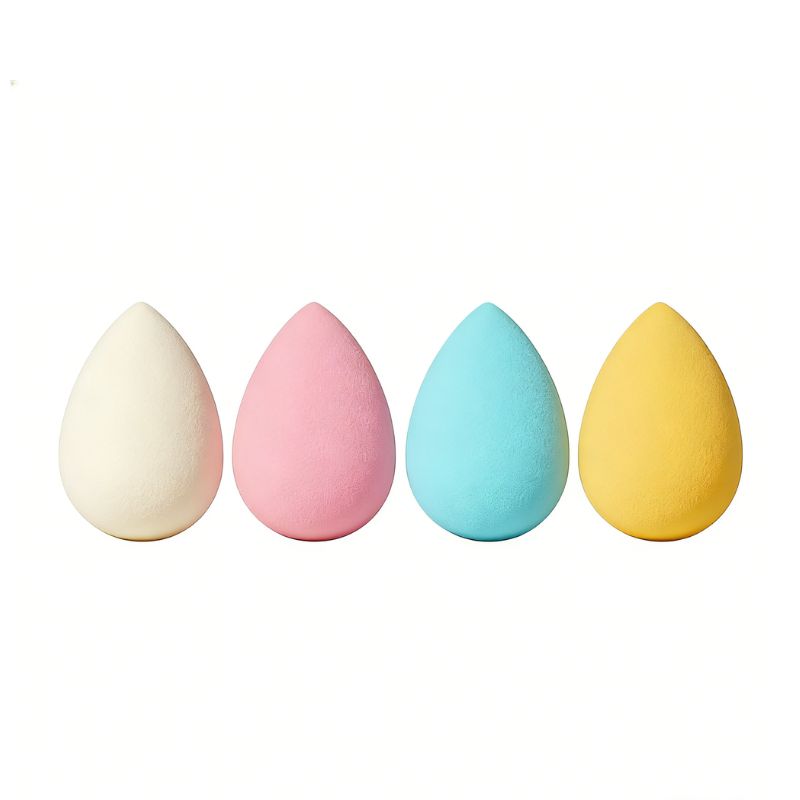
The egg-shaped makeup sponge has transcended trend status to become a permanent fixture in the cosmetic industry. As a professional manufacturer, we observe that despite the introduction of various novelty shapes, the classic egg silhouette dominates global orders due to its unmatched ergonomic efficiency. It represents the perfect balance of form and function, making it the primary sourcing target for beauty brands worldwide.
The Versatility of the 360° Edgeless Design
The enduring popularity of the egg sponge lies in its 360° edgeless architecture. Unlike traditional flat or wedge sponges that can leave visible lines, the continuous curve ensures a streak-free application.
- Broad Base: Designed for rapid application of foundation and bronzer on larger facial areas like the cheeks and forehead.
- Precision Tip: Engineered to navigate intricate contours, such as the under-eye area and the crevices around the nose.
- Rolling Technique: The shape facilitates a “stippling” or bouncing motion, pressing product into the skin for a natural, airbrushed finish rather than dragging it across the surface.
Market Demand: From Professional Kits to Everyday Consumer Must-Haves
Sourcing data indicates a massive shift in consumption patterns. Originally an exclusive tool for professional makeup artists, the egg sponge is now a non-negotiable staple in consumer makeup bags. This ubiquity drives high-volume wholesale demand.
For retailers and private label brands, this product offers high turnover rates. Because sponges are hygiene-sensitive tools requiring regular replacement, they generate consistent recurring revenue. From luxury cosmetic counters to mass-market drugstores, the demand for high-quality, reliable egg sponges remains robust and growing.
The Evolution of the “Classic Egg” in 2026: New Textures and Performance
While the shape remains iconic, the technology behind it has advanced significantly through our factory’s R&D. We are moving beyond basic foam to advanced Hydrophilic Polyurethane (Non-Latex) materials that redefine performance.
Modern manufacturing innovations include:
- Smart Expansion: Sponges that expand significantly when soaked, becoming softer and minimizing makeup absorption.
- High-Density Foam: Tighter pore structures that deliver a smoother finish while wasting less liquid product.
- Enhanced Durability: Improved resilience against tearing during the cleaning process.
- Custom Textures: Options ranging from velvety soft to high-bounce firmness to suit specific cosmetic formulas.
Material Science: Evaluating Quality at the Source
When you are sourcing makeup tools, the chemical composition is just as important as the physical shape. At Prilora Beauty, we know that a sponge’s performance relies entirely on the quality of the raw materials used during the injection and foaming process. Understanding these material properties is the first step in our guide to sourcing quality cosmetic makeup sponges that meet international standards.
Hydrophilic Non-Latex Polyurethane: Why It Matters
The global beauty market has moved away from traditional latex sponges due to common skin allergies and the distinct rubber smell often associated with them. The industry standard for premium egg-shaped sponges is now Hydrophilic Polyurethane (PU).
This material choice is non-negotiable for modern brands for several reasons:
- Hypoallergenic: It is safe for sensitive skin and reduces the risk of irritation.
- Eco-Friendly: Our non-latex material is more environmentally responsible compared to older synthetic options.
- Odorless: High-quality PU does not carry the chemical scent found in cheaper alternatives.
- Texture: It provides a significantly softer, “suede-like” feel that consumers expect from high-end beauty tools.
The “Magic Expansion”: Testing Water Absorption and Rebound Elasticity
The defining feature of a professional-grade egg sponge is its reaction to water. We utilize hydrophilic technology, which means the material “loves water.” When you soak our sponges, they are engineered to absorb water rapidly and expand to nearly twice their dry size.
This expansion serves a critical function: the water fills the open cells of the foam, preventing makeup from being absorbed deep into the core. This ensures the product sits on the surface for application rather than being wasted inside the tool.
Key Quality Indicators we test for:
- Expansion Rate: Does the sponge expand evenly without deforming?
- Rebound Elasticity: When squeezed, does the sponge bounce back to its original shape immediately? A sponge with poor resilience will feel dense and hard against the face, while high-resilience foam provides that signature “bouncy” application.
Fine-Cell Technology: Minimizing Product Waste for Premium Brands
One of the biggest complaints from consumers regarding cheap sponges is that they “eat” expensive foundation. This is a direct result of low density and large pore size.
We focus on high-density foam production. By controlling the foaming process, we create a microscopic, fine-cell structure. This tight density creates a smooth surface that buffs liquid and cream products into the skin for a flawless finish, rather than soaking them up. For brands, this is a massive selling point: a high-density sponge saves the consumer money by wasting less makeup product over time.
Navigating the Manufacturing Landscape in China
Sourcing egg-shaped makeup sponges from China requires a clear understanding of the industrial geography and supply chain structures. Knowing where to look and who to partner with determines the quality, price, and reliability of your final product.
Identifying the Key Manufacturing Hubs (Guangdong vs. Zhejiang)
China’s manufacturing is regionalized, and for cosmetic tools, the distinction between provinces is significant.
- Guangdong Province (Huizhou, Shenzhen, Dongguan): This is the premier hub for high-quality cosmetic accessories. Manufacturers here, including our facilities in Huizhou, typically focus on mid-to-high-end markets. The supply chain in Guangdong is mature, offering better access to premium raw materials like hydrophilic polyurethane and advanced packaging solutions.
- Zhejiang Province (Yiwu): Often known as the “small commodities” capital. While you can find lower prices here, the focus is frequently on mass-market, lower-tier goods. For brands prioritizing consistent density and skin-friendly materials, the industrial clusters in Guangdong are generally the superior choice.
Factory Direct vs. Trading Companies: Pros, Cons, and Cost Implications
Deciding between a direct manufacturer and a trading company is a pivotal strategic choice.
- Factory Direct: Working directly with us eliminates the middleman. You get the lowest possible unit price and direct access to the R&D team for customizations. This transparency is vital when developing specific densities or colors.
- Trading Companies: These entities source from factories and resell to you. While they may offer a wider range of unrelated products, they add a markup to every unit. Furthermore, communication regarding technical specs often gets diluted.
For a detailed breakdown on vetting partners, understanding how to find a reliable makeup sponge manufacturer is essential to avoid common pitfalls like inconsistent quality or delayed shipments.
Understanding Production Capacity and Scalability for High-Volume Orders
When your brand grows, your supplier must be able to keep up. A small workshop might handle your initial launch, but they often struggle with the consistency required for large-scale retail distribution. Professional manufacturers utilize automated injection and cutting systems to ensure that the 100,000th sponge is identical to the first sample.
Scalability also involves standardized quality control systems. A robust manufacturing facility operates under ISO9001 standards, ensuring that increased speed does not lead to defects. Before committing to a contract, verify that the factory has the daily output capacity to meet your peak season demands without bottlenecks.
Customization & Private Label (OEM/ODM) Solutions
In the competitive beauty market, a generic product simply won’t cut it. As a manufacturer, we understand that your brand identity relies on distinct visual and functional details. We provide comprehensive custom solutions that allow you to dictate every aspect of the final product, transforming a standard makeup tool into a signature item that your customers recognize instantly.
Beyond Pink: Custom Pantone Color Matching and Marble Effects
While the classic pink egg started the trend, modern brands require a broader palette to align with their visual identity. We don’t limit you to stock inventory colors. Through our OEM services, we offer precise Pantone color matching. Whether your brand requires a specific pastel tone or a bold neon hue, we adjust the dye formulation in our factory to meet your exact specifications.
For brands looking for something truly unique, we also develop complex textures and patterns:
- Marble Swirls: A mix of two or more colors for an artistic, premium look.
- Color-Changing Foam: Heat-sensitive materials that change shade upon contact.
- Dual-Tone Designs: Distinct colors for different functional areas of the sponge.
Precision Branding: Laser Engraving and Silk-Screen Logo Techniques
Putting your name on the product is the essence of private labeling. We utilize advanced branding technologies to ensure your logo remains visible and durable, even after repeated washing.
- Laser Engraving: This technique burns the logo slightly into the foam, creating a sophisticated, debossed effect. It is permanent and adds a tactile element to the sponge without using ink.
- Silk-Screen Printing: Ideal for high-contrast logos. We use skin-safe, non-toxic inks that adhere flexibly to the sponge surface, ensuring the design doesn’t crack when the sponge expands in water.
Bespoke Packaging: From Eco-Friendly Boxes to Luxury Retail Tubes
Packaging is often the first physical touchpoint a customer has with your brand. We move beyond standard bulk polybags to create retail-ready packaging that protects the product and elevates its perceived value. Our design team assists in developing structures that fit your distribution channel, whether it’s for e-commerce or physical shelves.
Popular Packaging Options:
- Clear PET/PVC Boxes: Showcases the sponge shape and color immediately.
- Paper Cylinders & Tubes: A popular choice for luxury positioning.
- Eco-Friendly Cardstock: Recyclable options for sustainable brands.
- Travel Cases: Hard-shell or silicone cases sold as a value-added set.
Compliance, Safety, and Quality Control (QC)
When you are importing beauty tools, safety and consistency are just as important as the price tag. As a professional manufacturer, we know that a single bad batch can damage a brand’s reputation. That is why we adhere to strict protocols to ensure every egg-shaped makeup sponge meets global standards before it leaves our facility.
Essential Certifications for the US & EU Markets (REACH, FDA, Prop 65)
The material touching your customer’s face must be absolutely safe. Our sponges are crafted from premium hydrophilic polyurethane (non-latex), which is hypoallergenic and skin-friendly. However, trusting the material isn’t enough; you need verification.
For the European market, REACH compliance is the gold standard, certifying that the foam contains no substances of very high concern (SVHC). If you are selling in the United States, your products should align with FDA guidelines for cosmetic accessories and meet California Proposition 65 requirements regarding chemical safety. We ensure our materials pass these rigorous checks so you can sell with confidence in any region.
Factory Audit Checklist: BSCI, Sedex, and ISO 9001 Standards
A legitimate factory does not hide its operations. When sourcing from China, you should look for manufacturers who welcome transparency. The most critical standard to check for is ISO 9001. This certification proves that the factory has a consistent quality management system in place.
At Prilora Beauty, our production standards are ISO 9001 and SGS certified. This means our workflows—from sourcing raw materials to shipping—follow a structured, internationally recognized framework. While ISO handles quality management, social compliance audits like BSCI or Sedex are also vital for brands focusing on ethical labor practices. Always ask to see current audit reports to verify the factory’s claims. You can stay updated on how we maintain these high standards through our news and insights.
The 3-Step QC Process: Raw Material, Mid-Production, and Final Inspection
Quality control is not just looking at the finished product; it is a continuous cycle. We implement a rigorous 3-step inspection process to catch defects early:
- Raw Material Inspection: Before foaming begins, we test the chemical composition of the hydrophilic polyurethane to ensure color accuracy and purity. This prevents issues with texture or expansion later on.
- Mid-Production Checks: During the foaming and cutting stages, technicians monitor the density and pore size. This ensures the sponge has that perfect “bouncy” resilience and isn’t too hard or too soft.
- Final Inspection: Before packing, every single unit undergoes a visual and physical check. We look for surface smoothness, shape uniformity, and cleanliness.
By controlling these variables, we ensure that the sponges you receive match the samples you approved.
Mastering Logistics: From Factory Floor to Your Warehouse
Sourcing directly from a manufacturer involves more than just product selection; moving goods efficiently from our facility in Huizhou to your distribution center is critical for maintaining margins. We streamline this process to ensure your inventory arrives on time and within budget.
Negotiating MOQs (Minimum Order Quantities) for Custom Orders
Minimum Order Quantities (MOQs) exist to cover the setup costs of production lines and raw material procurement. While we strive to be flexible, understanding the tiers helps you plan better. Standard egg-shaped sponges generally have lower entry thresholds compared to fully bespoke shapes that require new molds.
When you source directly from us, you bypass middleman markups, which gives you more leverage to negotiate better per-unit costs on higher volumes. If you are unsure about the right volume for your launch, contact our team to discuss a tiered strategy that scales with your business growth.
Optimized Packaging: Reducing Volumetric Weight to Save on Freight
Shipping costs are often calculated based on volumetric weight rather than actual weight, which can be tricky for lightweight, bulky items like beauty tools. Inefficient packaging means you are essentially paying to ship air. We focus on smart packing solutions to maximize container space without damaging the product.
- Bulk Packing: Shipping sponges in master polybags significantly reduces volume compared to pre-boxing individual units.
- Retail Assembly: Consider importing bulk makeup sponges and flat-packed retail boxes separately to assemble at your local warehouse.
- Vacuum Options: For specific resilient materials, we can explore compressed packaging to drastically cut down shipping dimensions.
Managing Lead Times: Peak Seasons and Chinese Holiday Planning
Timing is everything in supply chain management. Manufacturing schedules in China are heavily influenced by the calendar, and ignoring this can lead to stockouts. The most critical period is the Chinese New Year, where factories and logistics hubs shut down for several weeks.
To ensure a smooth flow of goods, keep these timelines in mind:
- R&D Phase: Custom shapes and color matching require time for sampling and approval before mass production begins.
- Buffer Zones: Always add a 2-week buffer to estimated shipping times to account for customs clearance or port congestion.
- Holiday Rush: Place orders at least 45-60 days before major holidays to secure production slots and avoid the pre-holiday logistics bottleneck.
Common Pitfalls to Avoid When Sourcing from China
Dealing with “Hidden” Costs: Tooling, Samples, and Taxes
When you are calculating your margins for The Ultimate Guide to Sourcing Egg-Shaped Makeup Sponges from China, looking at the unit price alone is a rookie mistake. As a direct factory, we eliminate middleman markups, but you must account for the full production picture. If you are requesting a completely unique shape or texture (ODM), there will be tooling fees to create the custom molds.
Don’t forget these often-overlooked expenses:
- Sample Shipping: While the sample sponge might be free or low-cost, express air freight for approval samples adds up.
- Import Duties: Check the HS code for makeup tools in your country to calculate tariffs accurately.
- Bank Fees: International wire transfers often carry transaction fees on both ends.
Communication Strategies: Bridging the Language and Time-Zone Gap
Clear communication is the backbone of successful manufacturing. Since our production hub operates in a different time zone, relying on vague descriptions like “make it softer” or “I want a bright pink” leads to delays. We recommend being hyper-specific to ensure the final product matches your brand’s vision.
- Use Pantone Codes: Never rely on screen screenshots for color; always provide exact Pantone values.
- Reference Samples: If you want a specific density or bounce, send us a physical benchmark sample.
- Written Specifications: Confirm every detail—from the hydrophilic polyurethane material to the packaging dimensions—in a formal purchase order (PO) rather than just chat messages.
Handling Defects: Establishing a Warranty and Replacement Protocol
Even with our rigorous ISO9001 and SGS certified production standards, defining quality expectations upfront is crucial for a smooth partnership. Before mass production begins, we should agree on what constitutes a “defect” versus an acceptable manufacturing tolerance.
Best practices for protecting your order:
- Golden Sample: Sign off on a final “Golden Sample” that serves as the absolute standard for the mass production batch.
- AQL Standards: Define the Acceptable Quality Limit (AQL) for minor cosmetic imperfections.
- Replacement Policy: We stand by our quality. Establish a clear protocol for how replacements or credits are handled if any items arrive damaged or non-compliant.