
Defining Biodegradable Materials for Buyers
Sourcing biodegradable makeup sponge wholesale products can feel like navigating a minefield of buzzwords. As a manufacturer, I see buyers constantly confused by what “eco-friendly” actually means on a chemical level. To build a zero waste beauty supply chain, you need to understand exactly what goes into the foam. It is not just about being green; it is about material science that delivers performance without the plastic guilt.
Bio-Polyurethane (Bio-PU) vs. Standard PU
The industry standard has long been hydrophilic polyurethane (PU). While effective, standard PU is derived entirely from fossil fuels. The game-changer we are seeing now is bio-based polyurethane foam.
Here is the breakdown of the difference:
- Standard PU: Made from 100% petrochemical polyols. It sits in landfills for centuries.
- Bio-PU: Replaces a significant portion of those petrochemicals with plant-based polyols (derived from corn, castor oil, or soy).
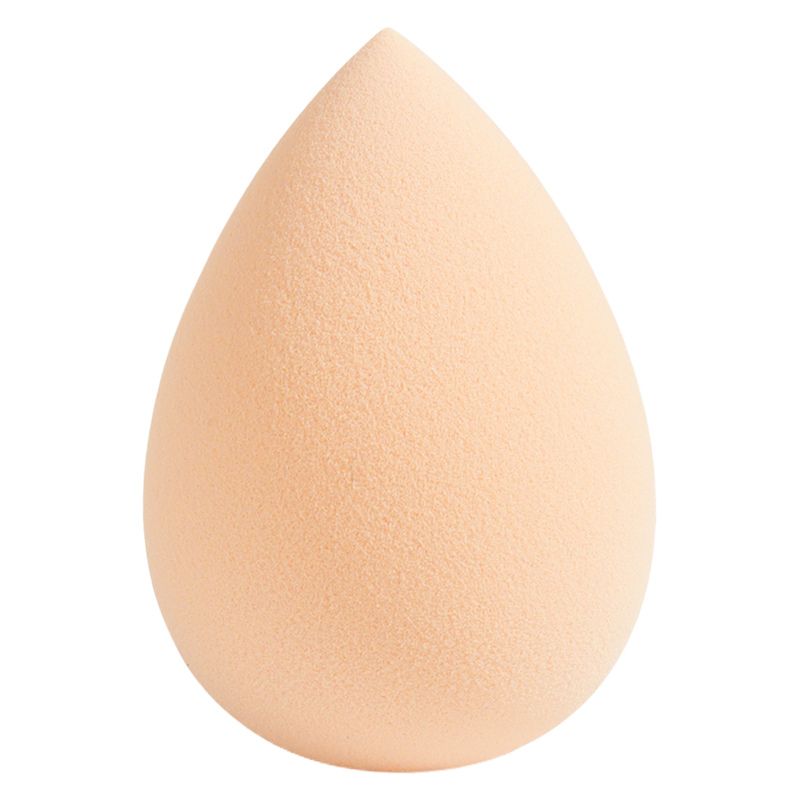
We use Bio-PU to create a latex-free biodegradable sponge that maintains that signature “bouncy” texture makeup artists demand. It offers the same softness and durability as a synthetic blender but significantly reduces the carbon footprint during production.
Konjac and Natural Fiber Alternatives
If you are looking to move away from foam entirely, Konjac sponge wholesale options are the 100% natural alternative. Made from the root of the Konjac plant, these are excellent for cleansing but offer a different application experience compared to a beauty blender.
We also incorporate agricultural waste fibers—like tea stems or starch—into our plant-based makeup tools. These fillers can accelerate degradation and give the sponge a unique, earthy aesthetic that appeals to the organic market.
Realistic Decomposition Timelines Explained
Let’s be real about “compostable.” A compostable makeup sponge does not just vanish into thin air if you leave it on a bathroom counter. Transparency is key to avoiding greenwashing claims.
- Industrial Composting: Most bio-sponges break down best in controlled facilities with high heat (approx. 3-6 months).
- Home Composting: Takes longer (6-12 months) and depends heavily on moisture and microbial activity.
- Landfill: Even bio-materials struggle to degrade in anaerobic landfill conditions.
When buying eco-friendly beauty blender bulk orders, ensure you understand these timelines so you can educate your end consumer honestly. We focus on materials that bridge the gap between high-performance application and realistic end-of-life sustainability.
The Business Case for Eco-Sponges
Switching your inventory to biodegradable makeup sponge wholesale sourcing isn’t just an environmental decision; it is a strategic financial move. The US market has shifted. Modern consumers, particularly Millennials and Gen Z, are actively dropping legacy brands that fail to address their environmental footprint. We see this as a massive opportunity for brands to pivot.
Boosting Consumer Loyalty with Sustainability
Trust is the new currency. When you offer a zero waste beauty supply, you are validating your customer’s values. They aren’t just buying an applicator; they are buying into a philosophy that aligns with their lifestyle. This emotional connection drives repeat purchases. We have observed this trend firsthand across our successful manufacturing projects, where brands that adopted sustainable materials saw a measurable uptick in customer retention and brand advocacy.
Differentiation Through Compostable Claims
The beauty aisle is crowded, and generic terms like “natural” are losing their impact due to overuse. Making a specific, verifiable claim—like offering a compostable makeup sponge—cuts through the noise. It provides a clear end-of-life story for the product that standard synthetic sponges cannot match.
- Standard Claim: “Eco-friendly” (Vague, often ignored)
- Strong Claim: “100% Compostable & Plant-Based” (Specific, drives sales)
Retailers and boutiques are specifically hunting for eco-friendly beauty blender bulk options that help them meet their own sustainability quotas.
Debunking Quality Myths: Safety and Performance
There is a lingering misconception that “biodegradable” means “fragile” or “rough.” Let’s set the record straight: modern bio-technologies have solved these early issues. A high-quality latex-free biodegradable sponge now rivals the performance of top-tier synthetic alternatives.
We prioritize performance to ensure the end-user never feels like they are sacrificing quality for the planet.
| Feature | Standard Synthetic Sponge | Modern Bio-Based Sponge |
|---|---|---|
| Texture | Soft, Bouncy | Equally Soft, High Bounce |
| Durability | 3-6 Months | 3-6 Months (Shelf Stable) |
| Application | Smooth Finish | Smooth, Pore-Minimizing |
| Disposal | Landfill (500+ years) | Biodegradable/Compostable |
The sponge will not start decomposing on your customer’s face or in their makeup bag. Decomposition only begins under specific composting conditions (moisture, microbes, and heat). You get the performance of a pro tool with the ethics of a green product.
Criteria for Selecting a Wholesale Partner
Finding a supplier for biodegradable makeup sponge wholesale isn’t just about securing the lowest price per unit. It is about finding a factory that understands the science behind bio-materials and can deliver consistent quality. In the US market, where consumers are increasingly skeptical of greenwashing, vetting your manufacturing partner is non-negotiable. You need a partner who acts as an extension of your team, not just a vendor.
Checking Essential Certifications (ISO, SGS)
If a supplier claims their sponges are compostable but cannot show you the paperwork, that is a major red flag. Documentation is the backbone of trust in the green beauty industry. You need third-party validation to prove that the eco-friendly beauty blender bulk order you are placing is genuinely safe, non-toxic, and sustainable.
Ensure your potential partner holds these standards:
- ISO 9001: This proves they have a consistent quality management system in place.
- SGS or Intertek Reports: These verify the material composition and confirm biodegradation rates (e.g., confirming it is truly bio-PU or plant-based).
- Cruelty-Free/Vegan Certifications: These are essential for the ethical beauty market demographics.
Effective sustainable supply chain management ensures that the eco-friendly claims you make to your customers are backed by verified data, protecting your brand reputation from scrutiny.
Customization Capabilities (OEM/ODM)
To stand out on the shelf, you need more than a generic beige wedge. A top-tier OEM beauty sponge factory must offer extensive customization options. This goes beyond just stamping a logo; it involves custom shapes, specific density adjustments, and unique bio-pigments that align with your brand identity.
- Private Label Support: Full capabilities for custom logo makeup sponge branding directly on the tool.
- Shape Engineering: Ability to mold ergonomic shapes that competitors do not have.
- Eco-Packaging: Options for biodegradable boxes or cornstarch bags to ensure the entire product is zero-waste.
Navigating MOQs and Scalability
Flexibility is critical for business growth. You might start small to test the market, but you need a partner who can ramp up production instantly when your product gains traction. High Minimum Order Quantities (MOQs) can strangle a startup’s cash flow, while low manufacturing capacity can bottleneck a growing brand during peak seasons.
We structure our production lines to handle both pilot runs and mass-market distribution. Whether you need a small batch of wholesale beauty accessories or container loads for a nationwide launch, the manufacturing process must remain efficient and scalable without compromising the integrity of the bio-materials.
Avoiding Greenwashing in the Supply Chain
Greenwashing is the silent killer of modern beauty brands. In the US market, consumers are becoming increasingly savvy; claiming a product is a biodegradable makeup sponge wholesale item without solid proof can lead to regulatory fines and a destroyed reputation. We see too many “eco-friendly” labels slapped on standard petroleum-based sponges, deceiving buyers who genuinely want to make a difference. Authenticity is the only way to survive in the zero waste beauty supply sector.
Identifying Supplier Red Flags
You need to know exactly who you are dealing with. If a potential partner claims to offer green beauty manufacturing but refuses to share material data sheets (MSDS), that is a major warning sign. Be wary of suppliers who offer prices that match cheap synthetic sponges exactly; genuine bio-based materials like Bio-PU or plant fibers inherently cost more to produce due to the complex extraction processes.
When you are evaluating partners and learning how to find a reliable makeup sponge manufacturer in China, keep an eye out for these specific red flags:
- Vague Terminology: Overuse of words like “natural” or “green” without scientific backing or percentage breakdowns.
- Missing Certifications: Inability to provide current SGS, ISO, or compostability documentation.
- Opaque Sourcing: Refusal to disclose where the raw plant materials are harvested or processed.
Ensuring Supply Chain Transparency
True sustainable supply chain management requires total visibility from the farm to the factory floor. As a manufacturer, I insist on tracing every batch of raw material to ensure it meets our eco-friendly beauty blender bulk standards. You should demand the same level of openness. A legitimate factory will welcome a third-party audit because they have nothing to hide.
Whether you are sourcing a konjac sponge wholesale order or a new batch of bio-blenders, always ask for the Bill of Materials (BOM). This document breaks down every component used in the sponge. If the supply chain isn’t transparent, the product isn’t truly sustainable, and the risk falls entirely on your brand.
Partnering with Prilora for Manufacturing
Choosing the right partner is critical when scaling your green beauty line. As a dedicated OEM beauty sponge factory, Prilora combines sustainable innovation with industrial-grade reliability. We understand that US consumers demand products that perform just as well as their synthetic counterparts, and our manufacturing infrastructure is built to deliver exactly that.
Our Advanced Foaming Technology
Creating a high-performance biodegradable makeup sponge wholesale order requires more than just mixing plant-based ingredients. Bio-polymers behave differently than traditional petroleum plastics, requiring precise temperature and pressure controls during the foaming stage.
Our state-of-the-art manufacturing facility utilizes proprietary technology designed specifically for bio-based polyurethane foam. This advanced process ensures:
- Uniform Pore Structure: Guarantees a streak-free makeup application.
- Optimal Hydrophilicity: The sponge expands quickly when wet and minimizes product waste.
- Consistent Softness: We maintain the “bouncy” texture users love, avoiding the stiffness often associated with natural materials.
Private Label Support from Concept to Shelf
We operate as a full-service private label cosmetics manufacturer, meaning we handle the heavy lifting while you focus on marketing. Bringing a custom eco-friendly beauty blender bulk product to market involves several complex steps, and we support you through every phase.
Our custom solutions cover the entire product lifecycle:
- Design & Prototyping: We create 3D molds for custom shapes, from classic teardrops to ergonomic sculptures.
- Material Formulation: Select from various plant-based infusions like tea, rose, or charcoal.
- Sustainable Packaging: We provide zero-waste packaging options, including biodegradable bags and soy-ink printed boxes.
Quality Control and Inspection Processes
In green beauty manufacturing, consistency is king. Natural materials can vary between batches, so our quality control protocols are stricter than standard industry requirements. We don’t just spot-check; we implement a rigorous multi-stage inspection process to ensure every sponge meets safety and performance metrics.
Our QC Checklist Includes:
- Density Testing: Ensuring the foam is neither too hard nor too flimsy.
- Durability Stress Tests: Verifying the sponge won’t crumble after a few washes.
- Microbial Testing: Ensuring all plant-based materials are sterilized and safe for skin contact.
By strictly adhering to these standards, we protect your brand reputation and ensure your customers receive a premium, safe product every time.
FAQs About Biodegradable Makeup Sponges
What is the shelf life of bio-sponges?
Many buyers worry that a compostable makeup sponge might start decomposing on the warehouse shelf. Fortunately, that is not the case. Bio-based polyurethane foam requires specific environmental conditions—specifically moisture and microbial activity found in soil—to begin breaking down.
- Dry Storage: When stored in a cool, dry place away from direct sunlight, these sponges typically have a shelf life of 2 to 3 years.
- Active Use: Once a customer starts using the sponge wet, it performs identically to a standard blender. We recommend the standard industry replacement cycle of 1-3 months for hygiene purposes.
Can biodegradable sponges be customized?
Absolutely. Switching to plant-based makeup tools does not mean you have to sacrifice your brand identity. As a private label cosmetics manufacturer, we offer extensive customization options for eco-friendly materials.
You can specify:
- Shape: From teardrops to bevel cuts.
- Color: We use eco-friendly, non-toxic dyes to match your Pantone requirements.
- Branding: We can produce a custom logo makeup sponge with laser engraving or specialized packaging.
We manufacture our makeup sponges to meet your exact specifications, ensuring your zero waste beauty supply products look just as premium as their synthetic counterparts.
How do wholesale costs compare to synthetic options?
Historically, sustainable options carried a significant price premium. However, as technology advances and demand for eco-friendly beauty blender bulk orders increases, the price gap is narrowing.
While a high-quality biodegradable sponge may cost marginally more to produce than a generic latex sponge due to the raw materials involved, the difference is often pennies per unit. For most brands, the ability to market a cruelty-free makeup applicator with a sustainable supply chain management story justifies the slight investment, as it allows for a higher retail price point and stronger consumer loyalty.


 English
  French (France)
  French (Canada)
  Japanese
  Korean
  German
  Italian
  Spanish
  Arabic
  Dutch
Dutch